
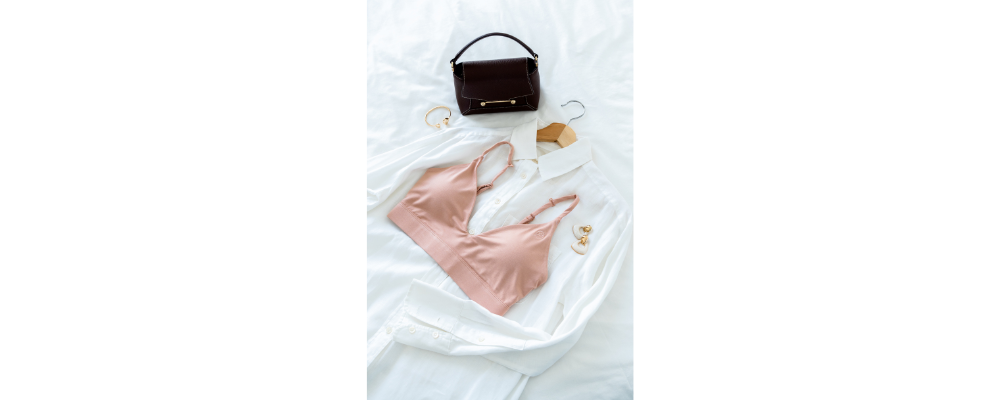
For decades, luxury spoke a visible language: a logo, a silhouette, a price tag everyone in the room recognised. That grammar hasn’t disappeared, but it no longer has a monopoly on how we signal value. A quieter shift has been building for years, and it is now impossible to ignore. The most sought-after luxury today is often invisible: worn under clothing, folded into bedsheets, poured into a candle, applied before bed. Nobody sees it. That, increasingly, is the point.
I founded Rawform because I kept noticing the same contradiction in my own life and in the women around me. We would spend carefully on the things people could see and settle for the things we actually lived in. Outerwear was considered, underwear was an afterthought. That gap never made sense to me. The layer closest to your body is the one you feel all day, every day. It deserves at least as much thought as the layer everyone else sees. That instinct turns out to be far from unique to us, and Dubai is a good place to watch it play out. Look at what’s actually thriving here right now. Brands such as L/C and One of a Kin are also putting fabrics like Modal into products designed around how they feel against the body, while Sunny Herbals Middle East has turned ingredients like aloevera and calendula into a considered daily skin care ritual rather than a quick fix before bed. Meanwhile, homegrown candle houses such as Wallace & Company have built entire brands around a single unseen sensory detail: how a room, or a person, feels rather than how they look. None of these brands compete with one another, and none of them are selling status in the traditional sense. What they share is a bet that people are preferring to purchase products for how it makes them feel, not just how it looks to a room full of strangers. That is not a small bet. It is a rewriting of what luxury is.
For a long time, luxury operated as a signal aimed outward, a type of status communicated to others. Increasingly, it is now aimed inward, a private marker of how well you are treating yourself when no one is grading the outfit. Comfort, once treated as the opposite of luxury, has become one of its clearest expressions. Buying the higher thread count bed sheets, the softer robe, or the well-made basics is not a retreat from luxury. It is a redefinition of it, rooted in daily experience rather than external display.
The Middle East offers a genuinely interesting vantage point on this shift, though I’d resist reducing it to a single explanation. Fashion here has always operated in layers, both literally and culturally, with a great deal of personal expression happening in spaces that are more private than public. That reality shapes how people in the region think about what’s worth investing in beneath the outer layer. At Rawform, the brand was built around a simple premise: the unseen layer deserves engineering, not indifference. Better fabrics, better construction, fit that holds up to real life rather than a single fitting-room mirror. We never set out to make a statement about underwear specifically. We set out to ask why one category of a person’s wardrobe had been exempted from the standards applied to everything else, and to fix that.
Whether this shift is driven by changing priorities, better products or simply a more honest understanding of what people value is almost beside the point. What’s clear is that luxury is no longer judged solely by what can be seen. Increasingly, it is judged by what can be felt, be it the quality of the fabric against your skin, the ritual at the end of the day, or the small decisions that shape how you experience everyday life. Those purchases may never attract attention from anyone else, but they are often the ones people value most.