
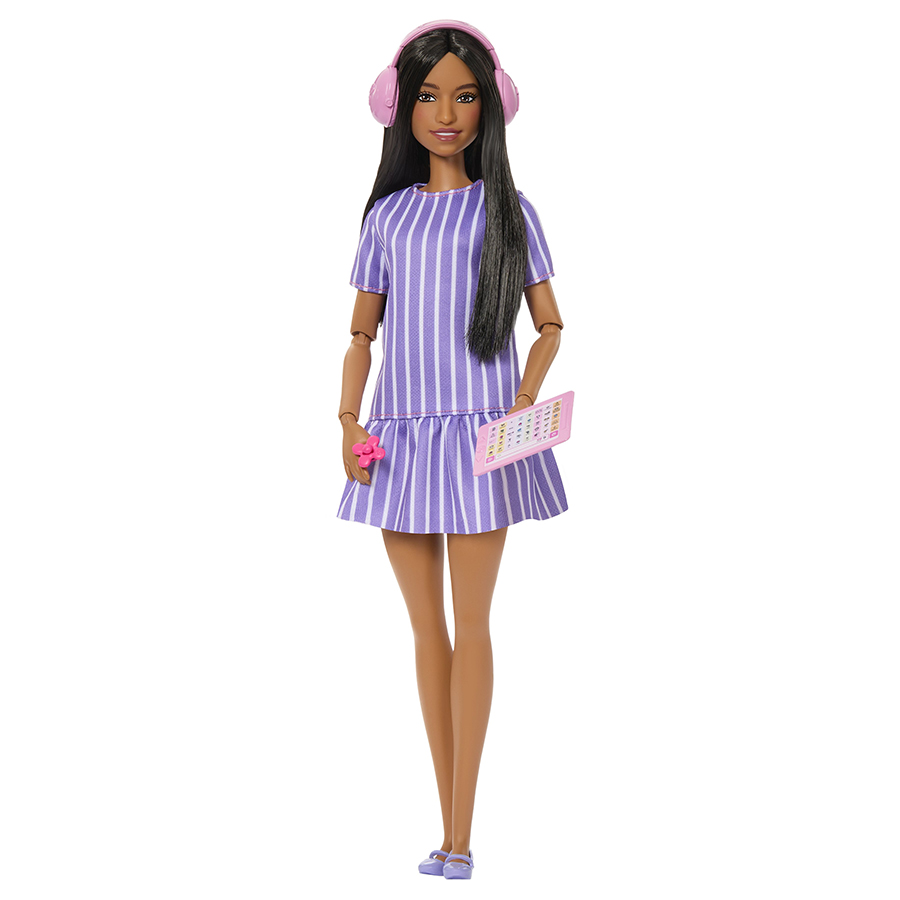
The first Barbie® Autistic Barbie Doll has arrived in the UAE, expanding representation and encouraging understanding through play. Launched during World Autism Month, the initiative highlights the importance of inclusion and aims to foster greater awareness and acceptance from an early age.
Created with guidance from the autistic community to represent some of the ways autistic people may experience, process, and communicate about the world around them, this doll invites more children to see themselves represented in Barbie.
In close collaboration with Autistic Self Advocacy Network (ASAN), intentional design choices authentically reflect some experiences autistic people may relate to. The autistic Barbie dolls’ features and accessories include:
- Face and Body: Along with a new face sculpt, the autistic Barbie doll features elbow and wrist articulation, enabling stimming, hand flapping, and other hand gestures that some members of the autistic community use to process sensory information or express excitement.
- Eye Gaze: The doll is designed with an eye gaze shifted slightly to the side, which reflects how some members of the autistic community may avoid direct eye contact.
- Accessories: Each doll comes with a pink finger clip fidget spinner, noise-cancelling headphones and a tablet.
- Fidget Spinner: The doll holds a pink finger clip fidget spinner that actually spins, offering a sensory outlet that can help reduce stress and improve focus.
- Headphones: Pink noise-cancelling headphones rest on top of the doll’s head as a helpful and fashionable accessory that reduces sensory overload by blocking out background noise.
- Tablet: A pink tablet showing symbol-based AAC (Augmentative and Alternative Communication) on its screen serves as a tool to help with everyday communication.
- Sensory-Sensitive Fashions: The doll wears a loose-fitting, purple pinstripe A-line dress with short sleeves and a flowy skirt that provides less fabric-to-skin contact. Purple shoes complete the outfit, with flat soles to promote stability and ease of movement.
Consistent with the Fashionistas dolls representing individuals with type 1 diabetes, Down syndrome and blindness, the autistic Barbie doll was named and created with the community’s guidance to allow more children to see themselves in Barbie. This doll, along with the entire Fashionistas collection boasts over 175+ looks, can help children better understand the world around them by encouraging doll play outside of a child’s own lived experience. It’s yet another step in making the Barbie brand a more inclusive reflection of the children who play with it.
The UAE continues to prioritise inclusion and accessibility for People of Determination as part of its national agenda, supported by federal policies that promote equal participation across education, employment and community life. According to the World Health Organization, approximately one in 100 children worldwide are autistic, underscoring the importance of awareness and meaningful representation. Barbie’s introduction of the autistic doll aligns with the UAE’s broader commitment to fostering inclusive environments through everyday experiences such as play.
Barbie continues to explore the impact of doll play on children’s social and emotional development, with global research indicating that imaginative play can help build empathy, understanding and communication skills. By encouraging children to engage with experiences both similar to and different from their own, doll play can support greater awareness and acceptance from an early age.
The autistic Barbie doll is now available from key toy retailers at AED 69.